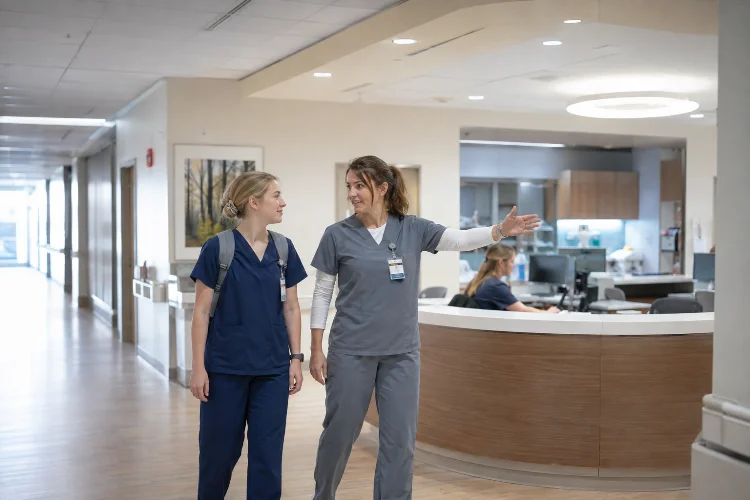
The first day of a clinical placement can feel overwhelming. A student may be trying to remember names, understand unfamiliar routines, find equipment, learn documentation systems, follow safety rules, and somehow still look confident in front of patients and staff.
A well-planned clinical placement orientation makes that transition much easier.
Orientation should be more than a quick tour of the building followed by, “Let me know if you have questions.” It should give learners enough information to work safely, understand what is expected of them, know where to find help, and begin learning without unnecessary confusion.
Professional standards for practice-based education emphasize appropriate supervision, safe learning environments, clear responsibilities, and support for students as they develop competence.
For clinical educators, preceptors, and placement coordinators, the goal is simple: create an orientation that answers the learner’s most important questions before those questions become problems.
Here is how to plan one effectively.
Why Clinical Placement Orientation Matters
Clinical environments are very different from classrooms.
Students are suddenly working around real patients, busy healthcare teams, confidential information, medications, equipment, infection-control requirements, and time-sensitive decisions. Even a capable learner can struggle if they do not understand how the local environment works.
An effective orientation reduces uncertainty by giving students a clear picture of the placement.
It should help them understand where they are, who they will work with, what they are allowed to do, how they will be supervised, and what they should do when something goes wrong.
This matters for learning, but it also matters for patient safety. The World Health Organization emphasizes that health professions education should prepare students to understand and apply patient-safety principles during clinical activities.
Think of orientation as the foundation of the placement. If that foundation is weak, educators may spend the rest of the rotation repeatedly fixing misunderstandings that could have been prevented on day one.
Start the Orientation Before the First Day
Good orientation can begin before the student walks through the door.
Send essential information in advance whenever possible. Students should know where to arrive, what time to be there, what identification or uniform is required, who their main contact will be, and whether they need to complete any mandatory training.
Avoid sending a 70-page handbook and assuming the learner will remember everything.
Instead, separate information into two categories: what must be understood before arrival and what can be learned during the placement.
For example, parking instructions, dress requirements, vaccination documentation, identification procedures, and arrival location belong in the pre-placement information.
Detailed explanations of ward routines or documentation processes usually make more sense once the student can see the actual environment.
A short welcome message from the preceptor can also make a difference.
Something as simple as, “I’ll be working with you on your first shift, and we’ll start by reviewing the unit and your learning goals,” gives the learner a clear point of contact.
Make Patient and Workplace Safety a Priority
Safety should be one of the first topics covered during a clinical placement orientation.
Do not assume that students already understand every local procedure. They may know general principles while still being unfamiliar with how your organization handles them.
Explain infection prevention procedures, personal protective equipment, sharps disposal, incident reporting, medication safety, emergency responses, and any location-specific risks.
The CDC recommends Standard Precautions for patient care, including appropriate hand hygiene and the use of personal protective equipment when exposure to infectious material is expected.
Students should also know what happens during an emergency.
Where are the exits? What does an emergency alarm sound like? Who should they contact after an exposure or injury? What should they do if a patient suddenly deteriorates?
Workplace safety guidance emphasizes knowing emergency procedures, evacuation routes, alarm systems, and appropriate contacts before an emergency occurs.
The key is not simply telling students that safety is important. Show them how safety works in your specific clinical environment.
Clarify Roles, Scope, and Supervision
One of the biggest sources of confusion during placements is uncertainty about responsibility.
Students need to know exactly who is supervising them and when they should ask for help.
Introduce the primary preceptor, clinical educator, practice supervisor, or other relevant staff members. Explain who can answer everyday questions and who should be contacted if there is a concern about performance, safety, or the placement itself.
Professional guidance on clinical supervision emphasizes that students need appropriate supervision while developing proficiency and increasing autonomy.
Explain what the student can and cannot do
This conversation should happen early.
A student may have performed a procedure successfully at another placement, but that does not automatically mean they are authorized to perform it independently in a new organization.
Be specific about local expectations.
For example, you might explain that the student can conduct a patient assessment independently but must review findings with the supervisor before developing a care plan.
Clear boundaries protect patients while reducing the student’s fear of accidentally stepping outside their role.
Give Students a Practical Tour of the Clinical Environment
A clinical tour should answer practical questions, not simply show students where rooms are located.
Walk through the areas they will actually use.
Show them where to find commonly used equipment, personal protective equipment, staff facilities, emergency supplies, clinical documentation stations, medication areas, and relevant patient-care spaces.
Explain how the unit flows during a normal shift.
When does handover happen? When are rounds usually conducted? How are patients allocated? Where are safety concerns discussed? How does the team communicate changes in patient condition?
AHRQ highlights communication, teamwork, and structured activities such as safety huddles as important elements of patient-safety culture in healthcare environments.
A learner who understands the rhythm of the workplace can participate more confidently instead of constantly wondering what happens next.
Explain Documentation, Communication, and Confidentiality
Clinical students often encounter documentation systems that are completely new to them.
Orientation should explain how they access electronic health records, where they document, whether entries require review or co-signing, and what information they are permitted to access.
Do not forget informal communication systems either.
Explain how staff communicate urgent concerns, how handovers work, when to use secure messaging, and who should receive particular types of information.
Students also need clear reminders about confidentiality.
Patient information should only be accessed for legitimate clinical purposes and handled according to organizational policy and applicable professional or legal requirements.
Practical examples can make this clearer.
Instead of simply saying, “Maintain confidentiality,” discuss situations learners may actually encounter, such as talking about patients in elevators, photographing clinical areas, posting about placements on social media, or accessing records unrelated to their assigned patients.
Set Learning Goals and Expectations Early
Orientation should not focus entirely on policies.
It is also the beginning of a learning partnership.
Ask the student what they hope to accomplish during the placement.
Questions such as, “What skills are you most comfortable with?” or “What would you like more experience doing?” can quickly reveal their learning needs.
Then connect their goals with required clinical competencies.
If a student wants to improve patient assessment skills, for example, you might agree that they will complete two supervised assessments during the first week and discuss their findings afterward.
Also explain how performance will be evaluated.
Students should know when formal assessments occur, how feedback will be given, what evidence they need to collect, and what happens if they are struggling.
Clinical assessment standards emphasize gathering appropriate evidence of student performance and addressing concerns when expected progress is not being achieved.
Clear expectations make feedback much easier later.
Create a Learning Environment Where Questions Are Welcome
Students learn better when they feel comfortable admitting what they do not know.
That does not mean lowering clinical standards.
It means creating an environment where asking for clarification is viewed as responsible behavior rather than weakness.
Tell students directly that you expect questions.
You might say, “If you’re unsure about something, ask before acting. I’d rather answer a question than have you guess.”
Clinical teaching research has identified supportive learning environments, feedback, communication, and positive educator–learner relationships as important aspects of effective preceptorship.
Educators should also model this behavior themselves.
If you are unsure about a policy or clinical question, show the learner how you verify the answer. That demonstrates professional responsibility and reinforces the idea that healthcare professionals continue learning throughout their careers.
Finish Orientation With a Check-Back
One common mistake is assuming that because information was explained, it was understood.
At the end of orientation, take a few minutes to check what the student remembers.
Ask simple practical questions.
Who will they contact if they cannot attend a shift? Where should they report a safety incident? What tasks require direct supervision? What is their first learning goal?
You can also ask, “What still feels unclear?”
This gives learners permission to raise questions they may have been reluctant to ask earlier.
Orientation should not end permanently after the first day either.
Revisit expectations after the first few shifts. Once students understand the environment better, they often have different and more useful questions.
A short follow-up conversation can prevent small misunderstandings from becoming larger problems.
An effective clinical placement orientation helps students move from uncertainty to confident, safe participation in patient care.
The best orientations combine practical information with patient safety, workplace procedures, supervision expectations, learning goals, communication standards, and opportunities to ask questions.
The goal is not to teach everything on the first day. It is to give learners the information and support they need to begin safely while showing them where to find help as new situations arise.
If you coordinate placements or supervise healthcare students, review your current orientation process from the learner’s perspective.
Identify what they genuinely need before day one, what they need during their first shift, and what can be introduced later. A clearer orientation can create a stronger clinical learning experience from the very beginning.