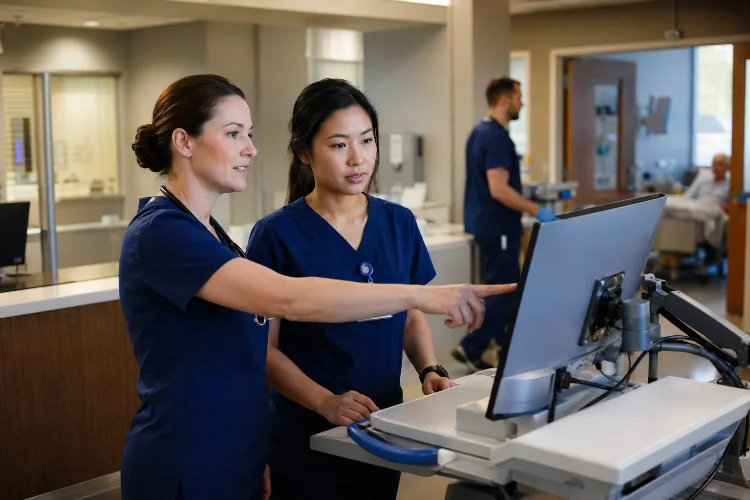
How to Teach Effectively During a Busy Clinical Shift

How to Teach Effectively During a Busy Clinical Shift

A busy clinical shift rarely feels like the perfect environment for teaching. Patients need attention, documentation keeps growing, new problems appear without warning, and the healthcare team is constantly adjusting priorities. Add a student or trainee to the mix, and teaching can easily feel like one more task on an already crowded schedule. Yet teaching … Read more

How to Conduct Respectful and Effective Bedside Teaching

How to Conduct Respectful and Effective Bedside Teaching

Bedside teaching is one of the few educational methods where students can connect textbook knowledge directly with a real person’s symptoms, concerns, physical findings, and healthcare experience. Done well, it can teach clinical examination, communication, professionalism, decision-making, and empathy at the same time. But effective bedside teaching requires more than bringing several learners into a … Read more

How to Ask Questions That Build Clinical Reasoning

How to Ask Questions That Build Clinical Reasoning

Good clinical educators do not always give learners the answer. Sometimes, the most useful thing they can do is ask the right question. A carefully chosen question can encourage a learner to notice important findings, compare possible explanations, recognize uncertainty, prioritize risks, and decide what to do next. In contrast, questions that only test memorized … Read more

How Adult Learning Principles Improve Clinical Teaching

How Adult Learning Principles Improve Clinical Teaching

Clinical teaching can be challenging because healthcare learners are not simply trying to memorize information. They need to understand complex concepts, apply them to real patients, make decisions under pressure, communicate effectively, and gradually become independent professionals. That is why understanding adult learning principles can make such a big difference. Adult learning theory, often associated … Read more